Spotting during pregnancy, or the appearance of small spots of blood from the vagina, can be scary. Whether it's serious or not depends on the stage of pregnancy and the cause of the bleeding. However, any time you see vaginal bleeding during pregnancy, you should call your doctor. The cause may not be serious, but in some cases it can be life-threatening.
Causes of Pregnancy Spotting
According to the American Pregnancy Association, bleeding is not uncommon during the first trimester. Spotting is less likely during the second and third trimesters.
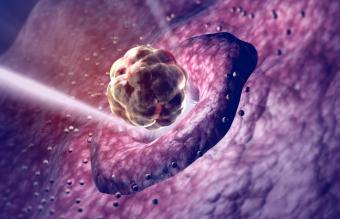
Implantation Bleeding
Implantation bleeding is light spotting probably caused when the fetus implants into the uterus a few days after fertilization, though no one is exactly sure what causes it. It usually occurs around the time you would get your period and some people confuse it with a light period. Implantation bleeding occurs in a minority of women.
Miscarriage
During pregnancy spotting may be an early sign of miscarriage. If you notice any abdominal pain or cramping combined with spotting, you should contact your care provider immediately.
There is no treatment for threatened miscarriage. Usually, your doctor will simply have you wait to see if the bleeding stops or miscarriage occurs. If miscarriage does happen, you may not need any physical treatment. Or, you may need a procedure to remove the pregnancy tissue. Early miscarriages often happen because there was something wrong with the developing baby. They are rarely due to anything the mother did or didn't do.
Ectopic Pregnancy
You may notice vaginal spotting if you have an ectopic pregnancy. This is a very serious condition when the fetus implants into the fallopian tubes or ovaries rather than the uterus. If the ectopic pregnancy isn't caught early, the fetus will grow until the fallopian tube ruptures, resulting in bleeding and abdominal pain. If the situation is not treated quickly, it can lead to death. Again, if you notice abdominal pain or cramping combined with spotting, you should contact your care provider immediately.
Ectopic pregnancies must be terminated. It's extremely rare for a baby to develop normally outside the uterus, and it is very dangerous for the mother to let an ectopic pregnancy continue. Early on, medicine can be used to end the pregnancy. If the fallopian tube has ruptured, surgery is usually necessary.
Infections
Yeast infections, bacterial vaginosis, and STDs can cause during pregnancy spotting. Some STDs such as trichomoniasis, gonorrhea, chlamydia, and herpes have serious implications for you, your baby, and your birth. You should notify your care provider if you suspect you have one. Yeast infections cause no problems for you or your baby, other than obvious discomfort.
infections can usually be eliminated easily with antibiotics or antifungals. However, certain infections may require more intensive treatment.
Sexual Intercourse
Sexual intercourse can cause vaginal spotting. As your pregnancy continues, the blood flow to your cervix, vagina, and perineum increases and tiny capillaries may burst during intercourse. It is nothing to concerned about, but you may want to check in with your care provider just in case.

Placental Problems
During pregnancy spotting may be sign of a placental problem such as placenta previa (when the placenta covers the cervix) or a placental abruption (when the placenta disenganges prematurely). These situations can be serious for you and your baby.
Placenta previa requires careful monitoring. Vaginal delivery can cause severe bleeding, so your doctor will likely recommend a C-section.
Placental abruption is a potential emergency. Internal bleeding can be severe, even if there is minimal vaginal spotting. If the bleeding cannot be controlled, the baby must be delivered immediately.
Premature Labor
You may notice spotting if you are going to labor early. If you notice cramping, back ache, or contractions before 37 weeks, especially if they are combined with spotting, you should contact your care provider.
Labor
For many people, labor begins with the release of the mucus plug. The mucus plug is often blood tinged and may be released over the period of a few days.
Unknown Reasons
For some women that experience spotting during pregnancy, medical experts can find no cause. If you and your baby are healthy and your care provider is aware of the situation, there is nothing to worry about.
When to Call the Doctor
Always call the doctor if you notice spotting during pregnancy. Your doctor or midwife can help you determine the cause and decide what to do. More substantial bleeding is a reason to go straight to the emergency room, however.