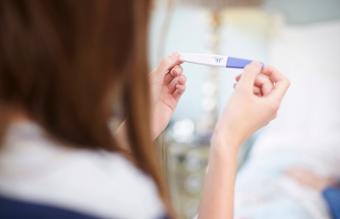
A false positive pregnancy test is a disappointment if you're trying to get pregnant. On the other hand, it can create stress or fear if you're not ready for a baby. There are a few factors that can interfere with the accuracy of the test and cause false positive results, although not as frequently as false negatives.
What a False Positive Test Means
A false positive urine or blood pregnancy test means you get a positive result when you are, in fact, not pregnant. Manufacturers say urine home pregnancy tests (HPTs) are 99 percent accurate to detect human chorionic gonadotropin (HCG) if done right, according to the Cleveland Clinic. Blood pregnancy tests have a similar accuracy.
Despite the accuracy of the test with perfect use, however, the results might be inaccurate and not reflect your true situation. Urine HPTs are more likely to give false results than a urine test done in a doctor's office or a lab blood test. Blood pregnancy tests are the most sensitive because they pick up lower HCG levels than HPTs.
Reasons for a False Positive Pregnancy Test
Reasons for a false positive pregnancy test result range from a defective urine HPT test kit to factors in your blood or urine that can interfere with your test results. This can lead to can sometimes lead to an involved evaluation and unnecessary treatment.
Defective Test Kit
Your false positive pregnancy test result might be because the test did not work the way it should. The problem might have to do with how the test was constructed or a problem with the test antibodies that pick up HCG in urine or blood. The test should be repeated with a different brand as a check on the first test.
Impurities in the Urine Sample
Impurities, such as soap or detergent residue, in your urine sample can cause a false positive pregnancy test. This can happen if you collected your urine in a cup that was not clean or that you washed with soap or detergent. Repeat the test if you think this was the problem.
You should not have a problem with impurities with the brands that provide a clean cup in the packaged test kit. With some brands, you urinate on the test stick instead of collecting a sample in a cup.
Inaccurate Interpretation of Results

Make sure you follow all the instructions that come with your urine test kit. This includes accurate reading of the test result within the suggested time frame. If you wait too long to read your test, you might get a faint, so-called evaporation line which you might misinterpret as a positive result. You might also get a false positive result of your test kit is expired.
Antibodies in the Blood
Antibodies in your blood can cause a false positive pregnancy test result, according to the American College of Obstetricians and Gynecologists. Most pregnancy tests use antibodies as the test agent to bind to the HCG in your blood or urine. This results in a positive reading if HCG is present, and a negative result if is not. Nevertheless, certain antibodies in the blood can bind to the test antibodies and mimic a positive blood test result.
Blood Cells in the Urine
Red or white blood in the urine, due to kidney disease or a bladder infection, can also cause a positive result. A 2012 article in Annals of Laboratory Medicine illustrate the possibility of false positive urine pregnancy test if there are of white blood cells in the urine.
Prescription Drugs
Certain prescription drugs can cause a false positive pregnancy test result. Lab Tests Online lists the following:
- Anticonvulsants used to treat seizures
- Anti-Parkinsons medicines
- Certain tranquilizers such as Valium
HCG-Producing Tumors
It is possible the HCG in your positive test is the result of a tumor instead of a pregnancy. These include:
- Rare HCG-producing germ cell tumors, which arise from eggs in the ovaries and might not be diagnosed until they are advanced. Your abdomen might get bigger, making you think you are pregnant.
- Also uncommon, gestational trophoblastic disease of the uterus is formed from abnormal growth of early embryonic cells. They can cause early pregnancy symptoms, such as morning sickness and an enlarging abdomen
- Certain types of lung cancer may cause false results.
- Benign ovarian cysts may also cause elevated HCG.
In all of these cases, a complete evaluation can determine the cause of your elevated HCG.
A Recent Miscarriage or Abortion
If you have reason to do a urine or blood pregnancy test soon after a miscarriage or a therapeutic abortion, you might get a positive result. This might lead you to wonder if you have a false positive result, if you are still pregnant, or if you have a new pregnancy.
Your pregnancy test can remain positive for up to five to six weeks after a miscarriage or an abortion. If you test within this time frame, you might get a positive result when in fact, you are not pregnant. In this situation, consult with your doctor for the appropriate evaluation, especially if you have pelvic pain or heavy or prolonged bleeding.
Pseudocyesis
Pseudocyesis is a condition where some women are convinced they are pregnant when they are not. In some cases, a pregnancy test gives a false positive result. Some of these women even have pregnancy symptoms including morning sickness, fetal movement, and pseudo labor pains. An ultrasound exam is an important part of the evaluation.
Perimenopause
The pituitary gland can secrete a small amount of HCG. This can increase as a woman ages, according to a study in published 2005 in Clinical Chemistry. If you are perimenopausal and get a pregnancy test done, for example to evaluate irregular periods, you might get a falsely positive urine or blood test result.
Clarify Your Situation
A pregnancy test result can cause joy or anxiety depending on your circumstances. If you think your HPT result is false positive, you can double-check it for accuracy by repeating the test. Whether you have a false positive on a urine test or a blood test, having your doctor evaluate your result and your health is important to clarify your situation.