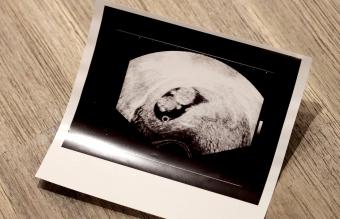
.3You and your baby are both getting bigger every week, especially at this point in the third trimester. This can lead to some discomfort, but hang in there. You only have a few more weeks to go before you can meet your little one.
Your Baby's Development

During week 33 of your pregnancy, your baby weighs in at around 4.25 pounds. He is now over 17-inches long from head to toe.
According to the Mayo Clinic, your little one's big development for this week is in his eyes. Although they've been open for a few weeks now, your baby's eyes can now see light. The pupil can constrict and dilate just like a newborn's can.
Your Changing Body
By now, you should have gained between 22 and 28 pounds, according to the American Pregnancy Association. Keep eating a healthy diet, and ask your doctor or midwife about any concerns you may have regarding weight gain or your health.
Around this point in your pregnancy, you may notice an achiness in the lower part of your belly. Always discuss any pain with your healthcare provider, but it's likely this is round ligament pain. You may notice this most when you get up from lying down or if you've been standing for a long period. These growing pains, th 032.;ough uncomfortable, are a normal part of pregnancy.
More to Know About Week 33 of Your Pregnancy

As you prepare for your delivery, you may hear about the pros and cons of having an episiotomy. An episiotomy is a surgical incision into the perineum, or the area of skin between the vagina and the anus. Its purpose is to enlarge the vaginal opening and make it easier to deliver your baby. In 2005, the Journal of the American Medical Association published an exhaustive review of literature about routine episiotomies. The review found that although 35% of women had routine episiotomies at that time, the outcome for those births was no better and healing may take longer. Routine episiotomies have become rare in recent years.
Episiotomies are sometimes used to speed up the birth process if your baby is compromised; so many women take steps to avoid them. Perineal massage and using warm compresses during delivery may also be useful. If you'd like to avoid an episiotomy, remember to discuss your concerns with your healthcare provider at your next prenatal appointment.
If you need help downloading the pregnancy calendar, check out these helpful tips.
Looking Forward
Your baby's birthday is approaching quickly, and it's normal to feel a mix of emotions. Take time to plan for medical concerns like episiotomies, but also be sure to take some time for yourself. Relax with a good book, watch a movie with your significant other, or go for a stroll. Getting your mind in a calm, healthy place is just as important as taking care of your body.