Pregnancy bleeding is a concern for many women throughout pregnancy. There are many possible causes for bleeding in pregnancy. Although some of them may pose a serious risk for you or your baby, others may not be serious at all. All bleeding during pregnancy should be evaluated by your OB provider so appropriate action can be taken if needed. About 20 percent of pregnant women have vaginal spotting or bleeding in the first 12-20 weeks of pregnancy and about 2 percent experience vaginal bleeding after 20 weeks of pregnancy.
What Should I Do if I Notice Pregnancy Bleeding?
Depending upon the cause of the bleeding, different things will be recommended. Initially, you should start marking your calendar with when you are bleeding and how much. If your bleeding is heavy or bright red, call your OB health professional immediately and discuss it with them. If it is spotting and light, it isn't an emergency, but still needs to be discussed with your OB provider. If you fall or receive a blow to your abdomen, you also need to discuss this with your OB health care provider.
Different Types of Bleeding During Pregnancy
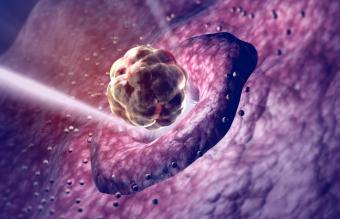
The causes of bleeding during pregnancy can vary depending on the stage of the pregnancy--early pregnancy bleeding usually has different causes than bleeding that occurs later, One of the first types of pregnancy bleeding is called implantation bleeding. After having a regular period and then no period, a small amount of spotting can be very concerning for a couple seeking a pregnancy. The bleeding might occur at any time once the egg becomes fertilized. After implantation, the lining of the uterus (endometrium) becomes thicker, engorges with blood, and the placenta begins to form. A little bit of spotting should be watched to see if it continues or if it just provides more clues to when conception occurred.
Miscarriage
Miscarriage is the loss of a pregnancy, usually occuring in the first three months of pregnancy. Symptoms can include vaginal bleeding, perhaps starting with spotting, and low abdominal cramping. The bleeding and cramping can stop and the pregnancy can proceed or it may increase as the miscarriage proceeds. One miscarriage usually isn't significant as far as future fertility, but it is still very concerning, especially for a couple seeking a pregnancy.
Sometimes an ultrasound will show a little bleeding around the placenta. Sometimes this leads to a miscarriage, though frequently bed rest helps the placenta to heal and the pregnancy can proceed.
Ectopic Pregnancy
An ectopic pregnancy or tubal pregnancy occurs when the fertilized egg, rather than traveling to the uterus, becomes embedded elsewhere, typically in the fallopian tube. As the fertilized egg grows, it can rupture the tube causing vaginal and internal bleeding, pain, weakness, and even shock. Immediate medical attention is necessary for an ectopic pregnancy
Infection
Vaginal infections and bladder infections are also a common source of pregnancy bleeding. The cervix also becomes very friable, which means it can bleed easily because of the increased blood flow. If you have intercourse, there can also be a small amount of bleeding. Sometimes there is a small polyp or lesion that might bleed more in early pregnancy.
Bleeding Later in Pregnancy
As your baby grows, the earlier concerns may decrease, but the MayoClinic.com notes other causes of bleeding during later stages of pregnancy.
Incompetent Cervix
Sometimes the cervix opens up early without labor. This is called an incompetent cervix or might be the result of an infection or a large fibroid tumor growing within the uterus.
Preterm Labor
Sometimes there can be blood-tinged mucous from bloody show, which is a sign of labor. If a bloody show occurs before 37 weeks, it could be an early sign of preterm labor and needs to be discussed with your OB care provider as soon as possible.
Placenta Previa
Placenta previa occurs when the placenta is very low in the uterus, either partially or totally covering the cervix. A first sign can be bleeding and pain. This condition is commonly seen on ultrasound. If an early ultrasound shows the placenta being low lying, a follow up ultrasound might confirm the placenta has moved out of the way of the cervix.
Placenta Abruption
Placenta abruption is when the placenta begins to pull away from the side of the uterus, depriving the baby of oxygen. Bleeding might be heavy, sometimes bright red, and there may be pain. Sometimes placenta abruption is related to smoking or the use of a stimulant or other recreational drug.
Evaluations and Management for Bleeding in Pregnancy
Diagnostic tests for bleeding will probably include a pelvic exam, pregnancy test, blood work, and ultrasound. If an ectopic pregnancy seems likely, a laparoscopy might be performed, which allows your OB provider to look inside of your abdomen and try to determine the cause of the bleeding.
Treatment will vary, depending upon the determined cause. If there is an infection, or the cause is minor, medications and perhaps bed rest are all that will be required. If your baby isn't growing at all and you are having a miscarriage, or you have an ectopic pregnancy, then your provider will have several different options for you. Sometimes surgery or medications are recommended or the pregnancy may spontaneously miscarry. Early diagnosis and treatment helps to avoid surgery.
Ultrasounds can show the placenta and the relationship of the baby to the placenta. Sources of bleeding can be seen also. Your provider will also monitor the fetal heart rate and do blood tests, especially if you are bleeding heavily. If your placenta is pulling away from the side of the uterus, this is considered an emergency. A low lying placenta might indicate a cesarean birth is necessary. These are all things your OB provider will discuss with you.
What Are Some Helpful Questions I Can Ask My OB Health Care Provider?
Although bleeding during pregnancy can be scary, it is important to seek medical care as soon as possible. You can ask your health care provider questions to help you understand your current medical situation. Examples include:
- What do you think is the cause of the pregnancy bleeding?
- Could this be an ectopic pregnancy or a miscarriage?
- What can be done to stop the bleeding?
- What can be done to protect the baby?
The outcome of pregnancy bleeding depends on the cause and whether it is treatable. No matter what, it is important to follow your OB's instructions to ensure the best outcome possible.