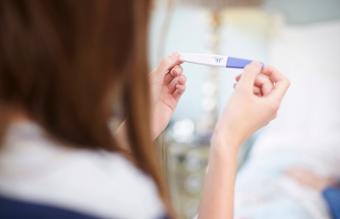
Perhaps, like many women, you would love to find out if you are pregnant right after a sperm fertilizes your egg. The technology isn't quite there yet, but current tests can detect your pregnancy hormone before you even miss your period.
The Earliest Time to Test
How long after ovulation can you take a pregnancy test? For the best chance of first detecting your pregnancy hormone, human chorionic gonadotropin (HCG), you should do your earliest home pregnancy test eight days after you ovulate. This is day 22 of the average 28-day menstrual cycle.
It is important to keep in mind that the timing of the test is not based on when you had sex, but when you think you ovulated. If you don't have 28-day cycles, or if they are irregular, use an ovulation calculator to help you figure out when you likely ovulated.
Scientific Support
An insightful study reported in 1999 in the New England Journal of Medicine (NEJM), showed:
- It is possible to first detect HCG in your urine as early as six to twelve days after you ovulate.
- Most of the women in the study, however, had their earliest positive urine pregnancy result between days eight to ten after ovulation.
- Therefore, if you test too soon, before day eight, you have a lower chance of detecting your HCG.
Testing too Soon
Note the following important facts about the timing of your first pregnancy test:
- If you test too soon because you are anxious to know whether you are pregnant, you stand the chance of getting a negative result despite being pregnant (a false-negative result).
- The closer you get to the day of your expected next period, the more likely you are to get an accurate result the first time.
- If you choose to do an early urine home pregnancy test (HPT) and get a negative result, wait at least a week to retest if you are still anxious to know.
- Better yet, if you don't want to waste your money buying several kits, wait at least until the day after you miss your expected period to repeat your test.
The Mayo Clinic says it's best to wait until a week after you miss your period.
Understanding False Negative Results
In addition to testing too soon, other factors increase the chance of getting a false-negative result on your pregnancy test. These factors include:
- The sensitivity of your test: Your HPT might not be sensitive enough to detect your low level of HCG.
- Uncertainty about ovulation: It is difficult to pinpoint the day of ovulation and conception, therefore your presumed number of days after ovulation might be inaccurate. If you kept track of fertility signs, this will help you time your testing.
- Irregular menstrual cycles: If your menstrual cycles are irregular, this adds another layer of uncertainty.
- Timing of implantation varies: You have no way of knowing exactly which day your embryo starts to implant and therefore when your HCG will begin to rise.
Note there are additional factors that might interfere with the accuracy of your test results, such as medications and drinking a lot of fluids before testing.
The Pregnancy Hormone and Implantation
Facts associated with the pregnancy hormone, human chorionic gonadotropin, include:

- The hormone begins to rise in your blood and urine when your fertilized egg at the blastocyst stage implants in your uterus.
- Implantation occurs during days six to twelve after ovulation (days 20 to 26 of a 28-day menstrual cycle) as found in the NEJM study referenced above.
- The hormone is made by specialized cells of the blastocyst and continues to rise rapidly every 36 to 48 hours during the early weeks of your pregnancy, according the Manual of High Risk Pregnancy and Delivery (page 343).
HCG becomes easier to detect as the levels increase in your blood and urine after implantation.
Home Pregnancy Testing
A home pregnancy test (HPT) measures the amount of HCG in your urine. You can find the tests in pharmacies, grocery stores, and other general retail stores. Important information you should know about HPTs include:
- The sensitivity of the tests, meaning the lowest level of HCG each can pick up, varies.
- For early testing, buy a kit that can detect at least 20 mIU of HCG; less sensitive tests will not detect HCG until several days after implantation is complete.
- Most brands recommend you test your first urine of the day, which is more concentrated so your HCG urine level will be higher. This improves your chance of detecting HCG if you test early in your pregnancy.
- Be sure to follow the instructions of your chosen HPT and the explanation of the accuracy of the results based on your week of pregnancy.
According to the Office on Women's Health, if used correctly, these tests are 99 percent accurate in detecting HCG. However, a study in Archives of Family Medicine found the actual percentage of accurate testing by consumers is lower.
Doctor's Pregnancy Testing
You can also do a urine pregnancy test at your doctor's office or a family planning clinic. In addition, you can have a blood pregnancy test done through your doctor.
A doctor might advise you to get early blood testing in certain circumstances, especially if you had fertility treatment, a problem in previous pregnancies, or you are anxious to have early testing. Compared to urine, a blood HCG test:
- Can also detect HCG as soon as six days after you ovulate
- Is more sensitive so it detects a smaller amount of HCG than in-home urine tests - making it less likely you will have a false-negative result if you test early
- Can measure the amount of HCG (quantitative HCG) - repeating the measurements every 36 to 48 hours can assess the health of your early embryo in the first weeks of your pregnancy
Talk to your doctor about the best time to complete your pregnancy testing.
Be Patient and Reduce Your Anxiety
It can be stressful to wait to perform a pregnancy test when you are anxious to know if you are pregnant. However, if you test too soon you and get a negative result, you might get more anxious while waiting to repeat the test a few days later. Remember that if you can wait, you are more likely to get an accurate result, whether at home or at your doctor's office.