There are many ways to calculate your conception date, but none of them are perfectly accurate. Any calculation of a conception date is an estimate, even in a person with regular 28-day menstrual cycles.
Except for in vitro fertilization (IVF) and other assisted reproductive procedures, you cannot precisely calculate the exact day a sperm meets an egg and fertilization (conception) occurs. However, you can use various factors and knowledge about reproduction to help narrow down the date to within one to five days if your cycles are regular.
Factors That Determine Conception Date Accuracy
If you are wondering how to determine a conception date, there are several methods. The accuracy of estimating your date of conception depends on a number of factors about your menstrual cycle and ovulation, as well as facts about the egg and the sperm. The day of conception depends on the following:
- Cycle length - The usual average length of a woman's menstrual cycle is 28 days, but there's a lot of variation in the exact numbers. A 2020 study of 1.5 million women published in the Journal of Medical Internet Research found that over 91% of women had a menstrual cycle between 21 and 35 days in length.
- Cycle regularity - Having regular menstrual cycles makes it easier to predict when ovulation occurs, and the 2020 study referenced above found that 69% of women have cycles that vary less than six days in length from one month to the next. Just over 25% of women have cycles that vary less than 1.5 days, so calculating conception would be easier for these women.
- Ovulation prediction accuracy - Accuracy by which the day of ovulation can be pinpointed can have a dramatic effect on conception date calculations.
- Timing of intercourse - The timing of intercourse around ovulation can also influence the day of conception, and the lifespan of the egg and sperm are factors to consider when calculating how the intercourse date relates to the possible conception date.
An obvious fact is you cannot conceive until you ovulate. Therefore, the most likely date of conception is on the day of ovulation if there is sperm around. If you can determine that day, you will come close to identifying your date conception. There are various ways to estimate the day of ovulation.
Conception Date Calculation By Menstrual Cycle Length
You can estimate your date of ovulation and conception from the length of your menstrual cycle if this is fairly regular. The most consistent part of the cycle is the second half after you ovulate, but this isn't a foolproof way to calculate.
The Journal of Medical Internet Research study referenced above indicated some variation between women when it comes to phases of the menstrual cycle and dates of ovulation with 67% of women ovulating between days 14 and 18. Women who have irregular periods will have a more difficult time determining the date of conception using the menstrual cycle length method.
Estimate Your Cycle Length
If your cycles are regular, keep track of how many days they are. This is your cycle length. You cycle starts on the first day of your menstrual period and ends when your next period starts.
Figure Out When You May Have Ovulated
You can use this information to help you estimate the day you most likely ovulated:
- Take your most usual menstrual cycle length.
- Get out your calendar and check the date of the first day of your last period of your conception cycle.
- Count forward the days of your cycle length to get the date you expected your next period - but instead got pregnant.
- Count backwards 14 days from that date. Ovulation, and the likely day of conception, occurred the day before that date, or one or two days before or after.
Other Ways to Estimate Date of Conception
If you were tracking other signs of fertility, such as basal body temperature charts, or ovulation predictor kits, they can help you narrow down your conception date to within one to two days. Get together any information you gathered that might help you determine when you ovulated.
Records About Ovulation Pain
More than 40% of women experience pain during ovulation, called mittelschmerz. If you were charting increased pain at mid-cycle, the day of the worse pain on one side of your pelvis is the likely day your egg ovulated. This is probably the day you conceived if you had intercourse around that time.
Notes From an Ovulation Predictor Kit
An ovulation predictor kit (OPK or LH kit) reliably predicts the window of ovulation 99% of the time. The at-home urine test measures the increase in the pituitary luteinizing hormone (LH) that occurs in the days leading up to ovulation. Your most fertile time to conceive is within the day or two after a positive result.

If you did an LH kit during your conception cycle, take a look at your test results. The day of your definitive positive reading is the day of the biggest increase in your LH. This "LH surge" triggers ovulation and predicts it is likely to occur 24 to 36 hours later. That one- to two-day window after your surge is the likely time you conceived.
BBT Charts
If you kept a basal body temperature chart (BBT) during the cycle you conceived, this is a useful tool to help pinpoint when you ovulated and therefore conceived. In general, your temperature is below 98 degrees Fahrenheit in the first half of your cycle, then shifts above 98 degrees the day after you ovulate.
In a typical 28-day cycle, this shift to a higher temperature usually occurs on day 14. It stays elevated if you conceive or falls below 98 the day you get your period. The temperature shift occurs because of an increase in progesterone production after ovulation.
Identify the last day your BBT chart was below 98 degrees during the first half of your cycle. That is your day of ovulation, and your likely day of conception. Note that your temperature might dip a few degrees on the day of ovulation before rising above 98 the day after.
Notes on Cervical Mucus Changes
Keeping track of cervical mucus changes within a menstrual cycle may help narrow down the day of ovulation. If you tracked these changes and kept notes, refer back to them. The day before your mucus changed to a thick, tacky, cloudy, dried-up mucus may have been the day of ovulation and your likely date of conception. The day of ovulation, your mucus would have been at its most thin and watery, as well as clear and stretchy like egg white. This is most likely the day you conceived.
Your Estimated Due Date
Once your doctor or midwife gives you your due date, count 38 weeks back on a calendar to find your most likely conception date. This calculation assumes the following:
- Pregnancy lasts 40 weeks and your due date is accurate.
- You ovulated and conceived on day 14 of your cycle.
- Your menstrual cycles are 28 days long and regular.
If your cycles are longer or shorter than 28 days, this method is less accurate.
How Ultrasound Can Determine Your Conception Date
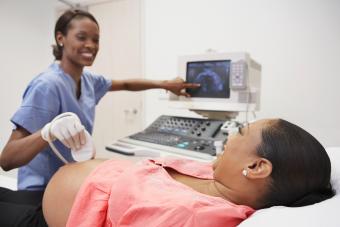
An ultrasound is yet another way to help establish a conception date. There may be some concern as to how accurate the conception date from an ultrasound would be, but an ultrasound during the first trimester (before week 14) is actually the most reliable method there is for predicting due date and conception date.
Trying for Pregnancy
If you are trying to get pregnant and need to hone in on a possible conception date, your doctor will initially want to determine when you ovulate. Ultrasound can be used to check for a mature follicle which is a fluid-filled sac in the ovary that contains an egg.
A transvaginal ultrasound is typically performed on your anticipated ovulation day, which can fall between day 10 to 14 of your cycle. Once the follicle is mature size (18 mm or larger), ovulation is usually imminent and a potential conception date can be determined.
An ovulation predictor kit may be used as well. Some doctors may want another ultrasound performed after ovulation to check that there are signs that the egg released and the follicle is resolving or gone.
Already Pregnant
If you are already pregnant and are curious about when you conceived, an ultrasound can help determine a date. How accurate is the conception date from an ultrasound? Measuring an early embryo by ultrasound will give you a gestational age +/- 4 days or so. Even though there is a 4 day "give or take window," ultrasound is still considered the most accurate way to determine gestational age in early pregnancy.
The Lifespan of the Egg and Sperm
It is important to remember the lifespan of the egg and sperm can influence the date of conception. According to Clinical Gynecologic Endocrinology and Infertility, the egg survives in the female reproductive tract only for about 12 to 24 hours after ovulation. Sperm retains its best ability to fertilize an egg for an average of three days in the tract after ejaculation, although it can survive up to five to seven days.
- There may be viable sperm still present to fertilize your egg if you have sex only once up to seven days before you ovulate. In this case, your day of conception will most likely be on the day of ovulation, even if you don't have sex that day.
- If you don't have intercourse until the day after ovulation, you may catch and fertilize a still viable egg. In this case your conception day will be one day after you think you ovulated.
A Conception Date Calculator
A conception date calculator can make it easier to figure out your date. The calculator below works for you if your menstrual cycles are regular and are between 24 and 38 days long. If your cycle lengths vary a lot, your results might not be accurate.
The calculator assumes ovulation occurs 14 days before the date of an expected period. Here's how to calculate your conception date:
- Enter the average length of your menstrual cycles in the first box.
- Enter the month, day, and year of the first day of your last period in the next boxes.
- Click the 'Calculate Date of Conception' bar.
The calculator will display the date you likely ovulated and conceived.
Conception Date Accuracy and Pregnancy Dating
Methods used to estimate conception date rely on trying to identify the day of ovulation. The various methods are accurate to within one to five days. It is important to note that doctors don't use the date of conception to date a pregnancy. Instead, they date a pregnancy and estimate a due date from the date of the last menstrual period or by an early pregnancy ultrasound.