Fetus Development
From LoveToKnow Pregnancy
Learning about fetus development can be a fun part of pregnancy. Your baby is growing and changing every day.
In the Beginning
A pregnancy begins with the fertilization of an egg. A single sperm enters the egg and sets the fetus development into motion. Amazingly, all the baby's cells come from that one single egg.
Instructions for the baby's development are contained in DNA from both the mother and the father. Every person's genes are collected in 46 bundles of DNA called chromosomes. The chromosomes contain all the instructions needed for a baby to form, for a child to grow, and for an adult's body to function. A woman's egg contains 23 chromosomes, and a man's sperm contains 23. When they combine, a full set of instructions is created.
The baby's sex is determined right away. It's the man's sperm that makes the difference; it can contain instructions for either a boy or a girl.
Early Development
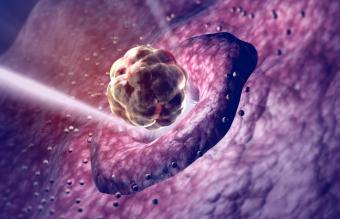
Very early in the pregnancy, the fertilized egg begins to divide. It splits into two cells, then four, then eight… until there are thousands. At first, any cell could become any part of the baby's body. Gradually, through signals that aren't fully understood, the cells begin to specialize. Some will become the nervous system, including the brain and the spinal cord. Some become the skin. Some will form the stomach and intestines, and so on.
Week by Week
In the first week of pregnancy, the cells begin to differentiate. Some will become the fetus. Others will become the placenta, which provides nutrition and oxygen to the growing baby. By the ]]Pregnancy Calendar Week 2|second week]], the placenta is beginning to form. The cells which will become the fetus become a little more specialized, and over the next few weeks it becomes clearer which cells will form what parts of the body. By about the third week, a very primitive heart has formed and has begun to beat. Limbs start to form in week four, as small bulges or "buds" that will eventually become recognizable arms and legs.
At these stages, the fetus (actually called an "embryo" from week four until about week eight) doesn't look like a baby at all. Over the course of the early weeks, a complicated process of cell movement and folding is happening. It serves to get everything into place for the next stages of fetus development.
Beginning to Look Like Himself
It's around week seven or eight that your fetus will become recognizable as a developing baby. He or she will have arms, legs, and tiny fingers. Eyes are beginning to form. Ears and nose appear. The brain is developing. But, this is still a very tiny creature—less than an inch long!
About week nine, the fetus begins to move on its own, although you won't be able to feel it yet. By week twelve, the baby's organs have formed, the kidneys are functioning, and hair and nails have started to grow. At week thirteen, the tissue that will become the baby's bones begins appear. Don't be surprised if the fetus reacts to loud noises beginning around week nineteen. That's when the ears begin to work.
It's usually week twenty when you'll first feel the fetus move. An ultrasound exam around this time may reveal if it’s a boy or girl.
Almost Ready
At 24 weeks, the fetus weighs about a pound. Although it would be dangerous for the baby to be born now, with expert medical care it's possible for a baby this young to survive. Lungs aren't quite ready to breathe air yet, skin isn't fully developed, and the eyes aren't ready to open. But at this stage of fetus development, he or she should be moving around vigorously.
During the remainder of the pregnancy, your fetus continues to grow and develop, getting ready to face the outside world. He/she begins to put on weight more quickly, developing a layer of fat underneath the skin to protect internal organs and keep the baby warm. The internal organs mature so that the intestines can handle food, the lungs can breathe air, the eyes can handle sunlight, and the brain can interpret what's happening and begin to learn.
The Big Day
When it's time to give birth, you're about to make the transition from being pregnant to being a mom—and it's time for your fetus to make the transition from fetus to baby. Instead of getting oxygen from inside your body, the baby will breathe on his/her own for the first time. Soon, he/she will be ready to eat, ready for diaper changes, and ready to begin growing up.
Comments
Big Mama, you should really talk to your doctor about your concerns. There are many things that can be done to help with pain management including anesthesia and Lamaze. You might also want to consider having a birth plan or using birthing techniques like a water birth.
Having a baby is a very safe thing that millions of women due each year without any problems. Although it is intimidating, your doctor and medical team can assist you through the hard parts. Good luck!
-- Contributed by: HollySwansonreally unless i do a miscarrage my life will end :( i feel the death coming to me while i push the baby out :'(
-- Contributed by: big mamahii nice pepyalk but i feel im going to die while giving birth
-- Contributed by: big mamaThis page has been accessed 7,356 times. This page was last modified 19:05, 25 July 2006.
© 2006-2008 LoveToKnow Corp.