Dr. Vilma received her M.D. in Obstetrics, Gynecology, Infertility and Reproductive Endocrinology from Harvard. She is trained in managing pregnancy, pre-pregnancy health, and family planning.
Fertility after childbirth, whether you're hoping to get pregnant again, or you're not, is often a concern. How easy is it to get pregnant after giving birth? From wondering if you're trying to conceive too early to making sure your birth control method of choice is ideal for your situation, there are many questions about postpartum fertility you'd probably like answered.
Return of Fertility After Delivery
The safest thing to do if you don't want to get pregnant soon after childbirth is to use a contraceptive. Many women become fertile again soon after childbirth although others can take longer, especially if they are breastfeeding.
In a review of studies published in the journal Obstetrics and Gynecology in 2011, most women who were not breastfeeding had their first postpartum ovulation about six weeks after childbirth while some ovulated sooner of later. The mean time to return of ovulation was 45 to 94 days after delivery. Important facts to note include:
A return of your fertility is a matter of how soon your brain hormones and ovulation, which were suppressed during pregnancy, return to normal.
As soon as you start ovulating again, you can get pregnant.
It is possible to ovulate and be fertile within a month after delivery and have another baby as early as ten months after that childbirth.
Be sure to discuss any fertility concerns and your plans for birth control with your doctor during your pregnancy and at your postpartum check-up.
Breastfeeding Delays Return of Fertility
Because breastfeeding delays the return of ovulation, it also delays return of your fertility, compared to women who don't breastfeed. Complete absence of ovulation and your period during breastfeeding (lactational amenorrhea) occurs if you breastfeed your baby on demand rather than on a schedule.
Breastfeeding interferes with the normal pattern of secretion of pituitary hormones that control ovulation. The delay in resumption of your ovulation and fertility depends on breastfeeding your baby throughout the day and night. Your regular ovulation, normal menstrual cycles, and fertility might not resume for six to twelve months after you decrease or stop breastfeeding.
Does Fertility Change After Childbirth?
Some women wonder if they could become more fertile after giving birth. How long it takes for any woman to get pregnant is largely a matter of chance, but some women might become more fertile after childbirth in certain circumstances:
Improvement in endometriosis because of suppression by high levels of estrogen and progesterone during pregnancy
Correction of hormone dysfunctions and spontaneous regulation of ovulation if there were problems before achieving the last pregnancy
Correction of tubal or ovarian adhesions, uterine problems, or male factors before or during the last pregnancy
Other women might find themselves to be less fertile after delivery because of new problems that developed during the last pregnancy, or during labor, delivery, or postpartum. These include onset of hormone dysfunctions and irregular ovulation, cervical or uterine infections, or new problems with the male partner.
Contraception After Delivery
To avoid getting pregnant sooner than you intended, the best thing to do is to discuss your contraceptive options with your doctor or midwife and make a choice before childbirth. Your birth control options include the following, depending on your circumstances and risk factors against certain choices:
Condoms and spermicide work well, especially for women who are breastfeeding or those who prefer not to or cannot take hormonal contraceptives.
Birth control pills are a more effective choice of birth control than condoms and spermicide but not recommended if you are breastfeeding. The progesterone-only mini-pills is a choice for women who cannot take estrogen because of risk factors, such as high blood pressure.
Other hormonal options that don't require the inconvenience of daily use include the patch, the vaginal ring, injectable Depo-Provera, and the hormonal implant.
The IUD is a long-acting, convenient method of contraception that is even more effective than the pill. It is a good option if you don't want to delay pregnancy for a few years and don't want to have to worry about taking a pill every day.
If you choose not to use any of these methods, you can use natural family planning methods by tracking your signs of fertility.
Breastfeeding as Birth Control
Many women ask about using breastfeeding as birth control. According to the Association of Reproductive Health Professionals, the Lactational Amenorrhea Method (LAM) of family planning is an effective means of contraception. Strict use of the LAM method, starting soon after delivery, has a one to two percent risk of pregnancy.
You can still get pregnant while breastfeeding. To decrease your chance of pregnancy, you have to breastfeed around the clock, and you cannot supplement it with bottle feeding. It's the suckling of your breasts by your baby that delays your normal function of brain reproductive hormones. Note that if you don't strictly adhere to the LAM method, you can't rely on breastfeeding to prevent you from getting pregnant. It is also better not to rely on LAM alone for birth control if you do not want to get pregnant for a year or more.
Resuming Menstruation
Menstruation returns after a different period of time for each woman following childbirth. There is no way to predict when this will happen for each person. It is normal to continue to bleed for about a week or more after delivery as the uterine lining heals but this is, by definition, not a period. For most women who are not breastfeeding, menstruation resumes between one to six months.
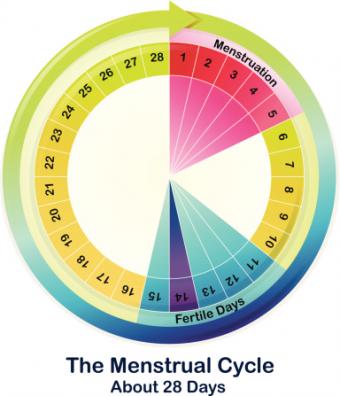
Your first true period will start 14 days after your first ovulation, which can occur as early as two weeks after you deliver your baby. In this case, you can have a normal period a month after delivery. However, your period can take months to resume if it takes you longer to ovulate, such as with breastfeeding.
How Soon You Can Try to Conceive
If you really want to have another baby close to your last, you can start trying to get pregnant as soon as six weeks post-delivery. However, your doctor or midwife might advise you it's safer to wait longer than that to give your body longer to recover.
Doctors recommend avoiding intercourse for six weeks after delivery of your baby to give your uterine lining time to heal and your uterus time to return to normal. If you have intercourse too soon, you run the risk of postpartum uterine infection and secondary infertility. In addition, if you are not yet using birth control, you might have a surprise pregnancy before you even see your first period.
Return of Fertility Varies
You cannot predict how soon your fertility might return after you deliver your baby. It depends on when you start ovulating, and this varies among women. Make sure you are using an effective form of birth control if you don't want to get pregnant soon after your childbirth.