
A urinary tract infection, or UTI, is certainly no one's idea of a good time. This common infection can cause uncomfortable symptoms that can disrupt your day-to-day routine. But there are some times when a UTI can be particularly challenging - like when you're trying to get pregnant. Treating a UTI when you're trying to conceive can raise a number of questions. Can you get pregnant with a UTI? And what if you take antibiotics? Will your medication affect your pregnancy chances?
If you are a woman that is worried about the way the infection will affect fertility, you can rest easy. Your UTI will not affect your chances of getting pregnant. But there are some things you should know about UTI and pregnancy that will help you and your partner stay healthy and improve your chances of conception.
What Is a UTI?
A UTI, or urinary tract infection, is an infection in the urinary tract. The urinary tract starts with the kidneys (which make urine) to the bladder (which holds urine) to your urethra. Your urethra is the small tunnel from the bladder to the outside of your body. UTIs happen when bacteria get into the urethra and decide they like it there. As these bacteria set up shop, they cause several symptoms:
- After you pee, you feel like you need to go again right away
- Bloody urine
- Burning when you pee
- Need to urinate more often than normal
- Pressure or cramping in the lower belly or groin
If you feel these symptoms, contact your healthcare provider. They will likely prescribe an antibiotic that will help your body shoo away the infection. Then follow your provider's guidance about medication and treatment.
You should also keep an eye on your symptoms and be sure that they improve. One type of UTI involves the kidneys. This type of UTI is called pyelonephritis. This infection can be more serious than a bladder infection and according to the CDC frequently causes fever, chills, nausea, vomiting, and pain in your lower back or the side of your back. If you feel these symptoms, see a healthcare provider right away.
Urinary Tract Infections and Pregnancy
A urinary tract infection, most commonly shows up in women, but men can get them too, according to the Centers for Disease Control (CDC). Since a female urinary tract is completely separate from the reproductive system, UTIs do not affect conception in women.
The male urinary tract, on the other hand, shares real estate with the reproductive system. So, in the rare event that your male partner has a UTI while you're trying to get pregnant, you may have trouble conceiving until he's all healed up.
Understand Anatomy Differences
You may be wondering why a male UTI can affect conception if a female UTI doesn't. It all has to do with the way our bodies are built. The female pelvis has three main roads that all go in the same direction, but never meet up. These roads are the urethra, the vagina, and the rectum. The urethra is only for urine, but the vagina "road" has all the reproductive stops on it: the cervix, uterus, and ovaries.
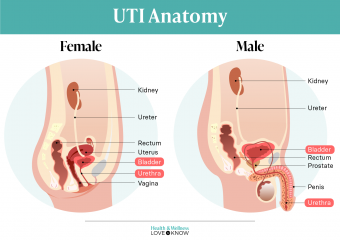
In a male pelvis, the urethra not only carries urine, but also reproductive fluids: semen. The "road" that carries these baby-making ingredients meets up with the urethra about halfway from the bladder to the outside world. When bacteria infect the male bladder and urethra, the body fights back. The immune system releases germ-fighting cells that can also damage sperm.
Get a Proper Diagnosis
Be careful not to mistake your symptoms of a reproductive tract infection for those of a UTI. If you are having trouble getting pregnant and have recurrent UTI-like symptoms, see your healthcare provider. Some sexually transmitted diseases (STDs) can mimic a UTI. While UTI can't stop conception, some STDs can.
Pelvic infections like pelvic inflammatory disease (PID) can also cause very similar symptoms as a UTI, so your healthcare provider's help is quite important to diagnose the right thing. A doctor's exam and lab testing can make sure you get adequate treatment for any of these issues.
What if You Are Already Pregnant?
Pregnant people get more UTIs because the baby shifts things around as they grow. As we said earlier, you can try to conceive while you have a UTI. However, once you get pregnant, bacteria in your urine can lead to pregnancy complications like slow fetal growth, premature birth, and low birth weight.
Your healthcare provider will check your urine a lot (you'll get really good at peeing in a cup), but be sure to let them know if you experience any UTI symptoms between visits. If you don't see a provider regularly, you can pop into an urgent care to have it checked out.
Prevention and Treatment of UTIs
If you are trying to conceive and you are concerned about your fertility, it is best to prevent any potential sources of infection that might interfere with conception or pregnancy. Good hygiene practices will help you stay healthy. It's also helpful to stay on top of any health changes or symptoms that you might experience and communicate with your healthcare provider.
Practice Good Hygiene
To avoid a UTI follow these guidelines:
- Don't hold it: Holding your urine can create the perfect growing conditions for bacteria.
- Pee after sex: This flushes out any bacteria that might have gotten into the urethral opening during intercourse.
- Stay hydrated: The more you flush your urinary system, the better it can get rid of unwanted bacteria.
- Wipe front to back: Avoid getting fecal bacteria anywhere near your urethra.
Take Medications as Directed
Many people get pregnant while taking antibiotics for a UTI without any harm to the fetus. You can safely take any antibiotic prescribed by your provider while you are trying to conceive, and during pregnancy, most antibiotics are also safe to take.
Stay Aware of Symptoms
Don't ignore bladder or pelvic symptoms, especially if you are trying to get pregnant. Although UTIs are unlikely to cause a problem with conception, early treatment decreases the risks to your pregnancy. Also, encourage your partner to get an evaluation and treatment to protect his fertility if he has symptoms of a UTI or an STI.
If you're the one with the uterus, you don't have to worry about UTIs disrupting conception. It's always a good idea, though, to get UTI symptoms checked out with your healthcare provider or a local clinic. Then you can get those symptoms taken care of and get back to making babies!


